Italian food often creates memorable results by bringing a few complementary elements together. Ravioli al pomodoro follows this approach, combining filled pasta with the familiar character of tomato sauce. The filling provides depth, while the sauce adds moisture, acidity, color, and a recognizable Italian identity.
The experience can vary considerably because ravioli may contain cheese, vegetables, meat, fish, or other fillings. Tomato sauce may also be prepared in different ways, from a light fresh-tomato coating to a richer sauce suited to robust fillings.
Understanding these differences helps diners interpret dish descriptions and choose a style that matches their preferences. It is also useful when asking a restaurant about current preparations, ingredients, allergens, portion sizes, and available fillings.
Pizzeria Ristorante Marcantonio is a restaurant located at Borgo Pio, 146, 00193 Roma RM, Italy. Diners planning a food visit can contact the restaurant through ristorantemarcantonio.it to confirm current availability and request accurate information about its food offerings.
1. Why Ravioli al Pomodoro Remains So Appealing
The central attraction of this combination is balance. Ravioli already has two important components: pasta and filling. Tomato sauce introduces a third element that can connect them without concealing the filling’s character.
A well-matched sauce should support the pasta rather than dominate it. A delicate filling generally benefits from a restrained sauce, while a richer filling may work better with a sauce that has greater body. The final result depends on the relationships among flavor, texture, moisture, and portioning.
Understanding ravioli al sugo di pomodoro
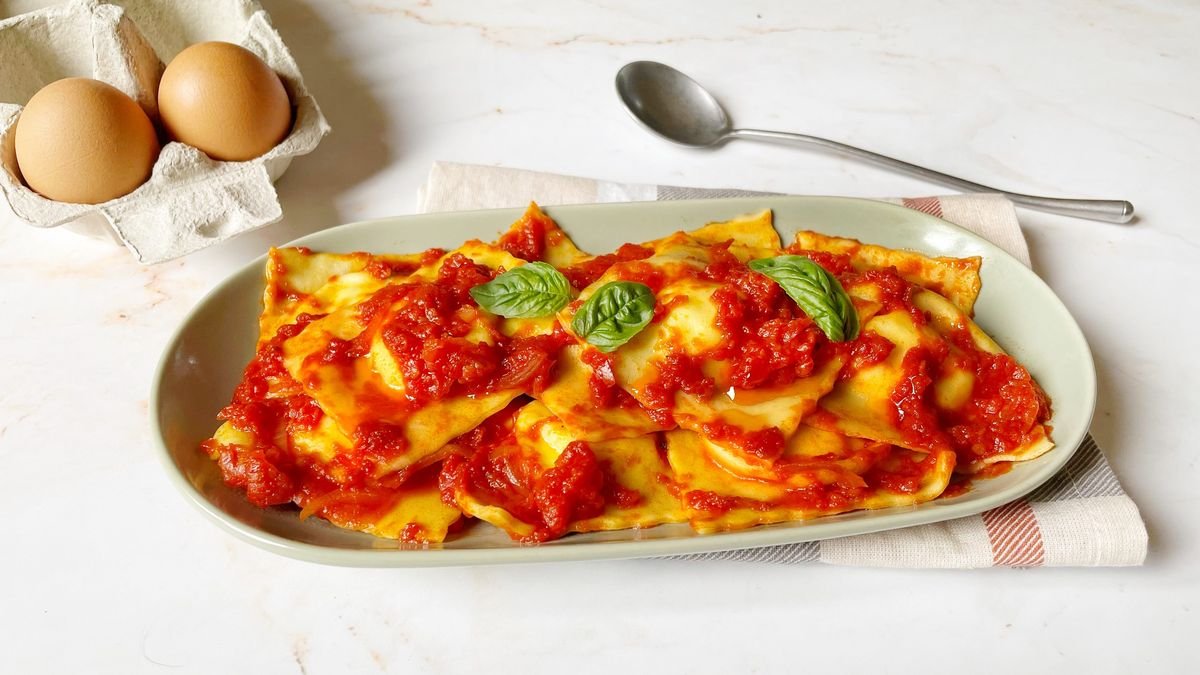
The expression ravioli al sugo di pomodoro generally refers to ravioli served with tomato sauce. However, the wording alone does not specify the filling, sauce texture, seasoning, cheese, garnish, or preparation method.
One version of ravioli al sugo di pomodoro may be light and simple, while another may be fuller. Diners should therefore read the complete description or ask the restaurant for clarification before ordering.
The appeal of ravioli al sugo di pomodoro also comes from its flexibility. Tomatoes can accompany a wide range of fillings, provided the sauce and filling are carefully matched. This adaptability explains why many related search terms describe different ingredients under the same broad tomato-based theme.
2. The Sauce Should Complement the Filling
Tomato sauce is not merely a finishing layer. It affects the moisture, aroma, acidity, sweetness, color, and overall weight of the dish. Its consistency also influences how well it coats the ravioli.
Choosing a sugo al pomodoro per ravioli
A sugo al pomodoro per ravioli should take the filling into account. A heavy sauce may overwhelm a mild cheese or vegetable filling, while an extremely light sauce may not provide enough contrast for a robust meat filling.
The quantity matters as much as the flavor. Too much sauce can hide the pasta and filling. Too little may leave the dish feeling disconnected. A balanced sugo al pomodoro per ravioli should coat the pasta while keeping each piece recognizable.
Texture is another consideration. Some diners prefer a smooth sauce, while others favor the character of tomato pieces. When asking about a sugo al pomodoro per ravioli, it can be helpful to confirm whether it is smooth, rustic, fresh, rich, mild, or strongly seasoned.
Sugo al pomodoro per ravioli di carne
A sugo al pomodoro per ravioli di carne must work with a filling that may already have considerable depth. The sauce should provide contrast and moisture without making the complete dish unnecessarily heavy.
The term does not identify the type of meat or its seasoning. Anyone with dietary restrictions should request specific ingredient information. The restaurant is the appropriate source for current preparation details.
Portioning also matters when selecting a sugo al pomodoro per ravioli di carne. The ideal relationship allows the filling to remain present in every bite while the tomato contributes freshness and structure.
3. Filling Changes the Entire Experience
Two dishes can use similar tomato sauces yet taste completely different because their ravioli contain different fillings. Cheese can add creaminess, vegetables can add an earthy or delicate character, and meat can produce a richer result.
Ravioli al brasato con sugo di pomodoro
Ravioli al brasato con sugo di pomodoro describes a substantial pairing in which a braised-meat filling meets tomato sauce. The wording suggests a stronger flavor profile than a simple cheese-filled version, although the exact recipe can vary.
Because the filling is likely to be the dominant component, the tomato element should provide balance. When considering ravioli al brasato con sugo di pomodoro, diners may wish to ask about the sauce’s richness, the filling’s ingredients, and any finishing cheese.
The preparation of ravioli al brasato con sugo di pomodoro may vary from kitchen to kitchen. A menu name should therefore be treated as a useful description rather than a complete ingredient statement.
Ravioli di borragine al pomodoro
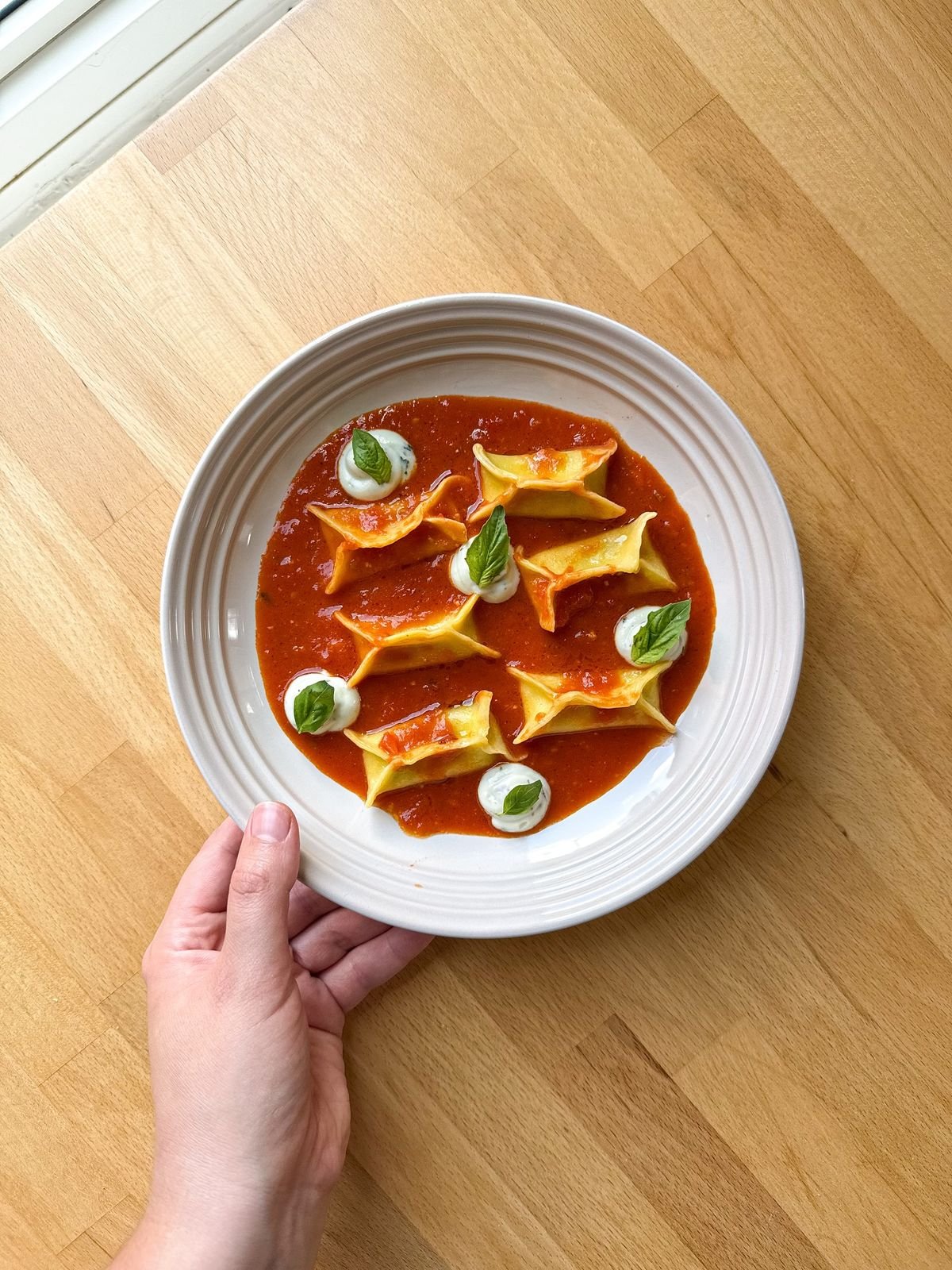
Ravioli di borragine al pomodoro represents a vegetable-based direction. Borage can give the filling a distinctive identity, while tomato supplies color, acidity, and moisture.
The exact balance depends on what else is included in the filling. Cheese, herbs, and seasoning can all affect the finished character. Guests interested in ravioli di borragine al pomodoro should confirm ingredients directly if they have allergies or dietary requirements.
A third mention of ravioli di borragine al pomodoro is useful when comparing it with meat-filled pasta: the vegetable filling may call for a lighter tomato treatment. At the same time, meat often supports a fuller sauce.
4. Cheese and Vegetable Fillings Offer Many Possibilities
Cheese-filled ravioli can interact with tomato in several ways. Ricotta can soften the tomato’s acidity, while spinach adds another layer of flavor and a visual element. However, ingredient proportions and seasoning determine the final result.
Ravioli di ricotta al pomodoro is a straightforward example of this relationship. The cheese filling and tomato coating can form a gentle contrast without requiring an elaborate presentation.
The phrases ravioli ricotta e spinaci al pomodoro and ravioli di ricotta e spinaci al pomodoro describe closely related ideas. Small differences in wording do not necessarily reflect differences in the recipe, so diners should rely on the restaurant’s current description.
Ravioli di magro al pomodoro may refer to a meat-free filling, but the term alone is not a guarantee of a meat-free diet. Anyone following a vegetarian diet should ask about the filling, sauce, cheese, stock, and preparation process.
Ravioli di zucca al pomodoro brings together the character of pumpkin filling and tomato sauce. Because pumpkin can contribute sweetness, acidity, and seasoning, it becomes especially important to the overall balance.
Another cheese-focused option is ravioli di burrata al pomodoro. Burrata suggests a creamy center, but the exact ingredients and serving style must be confirmed from the current menu rather than assumed from the name.
5. Fresh Tomato, Basil, and Cheese Can Change the Finish
A tomato-based preparation can feel light, rich, creamy, or baked depending on its supporting ingredients. Even a small addition may affect texture and intensity.
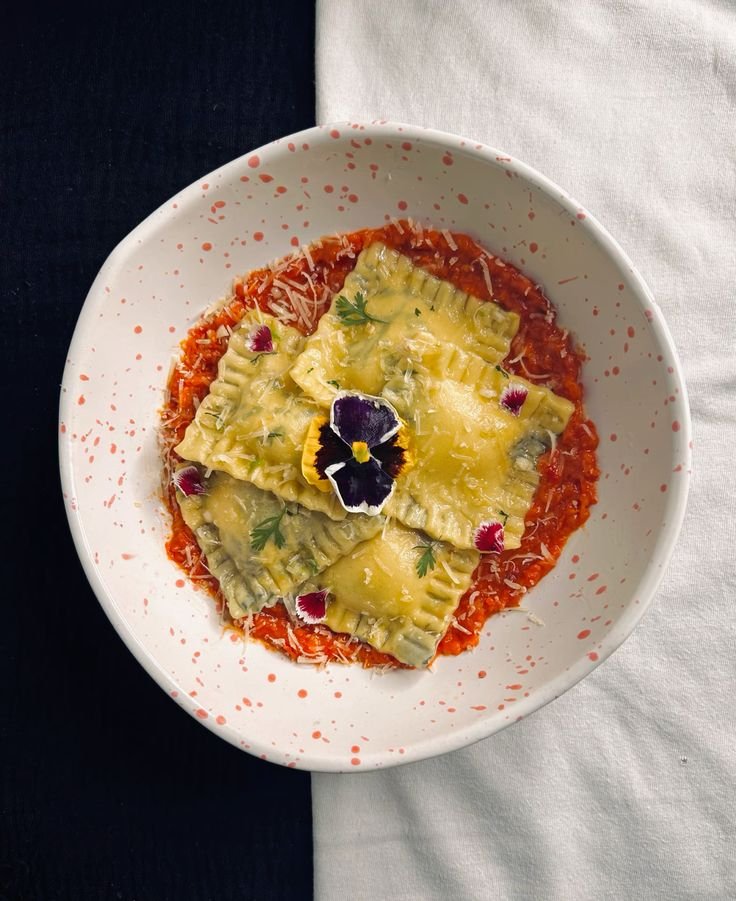
Ravioli al pomodoro e basilico pairs the tomato theme with one of Italy’s most recognizable aromatic herbs. The amount and form of basil can influence whether it appears as a subtle accent or a prominent flavor.
Ravioli al pomodoro fresco emphasizes fresh tomatoes. It may suggest a lighter presentation, but the exact preparation, seasoning, and consistency remain specific to the kitchen.
A search for ravioli al pomodoro e mozzarella usually reflects interest in adding a mild, creamy cheese to the tomato-and-pasta combination. Mozzarella can change both the texture and the richness, especially when heated, allowing it to soften.
Ravioli al pomodoro e stracciatella describes another creamy direction. Stracciatella may add a softer finishing contrast to the acidity of tomato, but diners should confirm whether it is part of the filling, sauce, or garnish.
A baked interpretation
Ravioli al forno con pomodoro e mozzarella shifts the focus toward baking. This method can create a more substantial texture because sauce, pasta, and cheese are heated together.
Baking may also produce different edges, moisture levels, and cheese textures compared with freshly boiled ravioli served directly with sauce. The exact result depends on timing, temperature, sauce quantity, and serving method.
6. Regional and Creative Names Need Context
Some ravioli names refer to regional inspiration, distinctive fillings, coloured pasta, or creative interpretations. The title can guide expectations, but it cannot replace a full menu description.
Ravioli capresi al pomodoro may suggest inspiration from Caprese-associated ingredients or flavors. However, the phrase does not prove that every familiar Caprese ingredient is present.
Similarly, ravioli capresi al pomodoro fresco emphasizes fresh tomatoes. Diners should still ask which ingredients are in the filling and which are served as toppings.
Ravioli sardi al pomodoro points toward a Sardinian connection, but recipes associated with a region can vary. The filling, pasta shape, seasoning, and cheese should be confirmed through the restaurant’s current information.
The phrase ravioli rossi al pomodoro may refer to red-coloured pasta, tomato in the dough, or another visual interpretation. The name alone does not establish how the color is produced.
Creative preparations include ravioli di pappa al pomodoro, in which the well-known tomato-and-bread concept inspires the filling or presentation. Related wording includes ravioli pappa al pomodoro and ravioli ripieni di pappa al pomodoro.
These three descriptions may refer to similar culinary ideas, but they are not automatically identical. The recipe could change depending on how the tomato, bread, herbs, filling, and sauce are arranged.
7. Meat and Fish Fillings Require Careful Pairing
Meat-filled ravioli generally need a sauce that can support a stronger center. Tomato can provide acidity and moisture, but the final balance depends on the type of meat, cooking method, seasoning, and sauce concentration.
Ravioli di carne al pomodoro is a broad description. It identifies meat and tomato as central elements, but does not specify the meat, additional filling ingredients, or sauce style.
The more detailed phrase ravioli di carne al sugo di pomodoro confirms the use of tomato sauce but still leaves important questions unanswered. Diners with allergies or dietary restrictions should never rely solely on a short dish name.
Fish creates a different challenge. Ravioli ripieni di baccalà al pomodoro combines a distinctive fish filling with tomato. Salt level, sauce acidity, herbs, and portioning all become important to the overall result.
When comparing these possibilities, consider the entire plate rather than focusing on a single ingredient. Ravioli al pomodoro works best as a coordinated combination in which pasta, filling, sauce, garnish, and seasoning each have a clear role.
How to Choose a Suitable Ravioli Style
Begin with the filling. Decide whether you prefer meat, fish, cheese, vegetables, or a creative tomato-and-bread interpretation. The filling usually has the greatest influence on a dish’s character.
Next, consider the sauce. A fresh preparation may feel lighter, while a richer sauce can better support strongly seasoned fillings. Neither approach is automatically superior; suitability depends on the complete combination.
Texture is also important. Some people prefer delicate pasta and a smooth coating. Others favor a rustic sauce, melted cheese, a baked finish, or a filling with greater structure.
Ask whether cheese is included in the filling, sauce, or garnish. This is particularly important for allergies, intolerances, vegetarian requirements, and personal preferences.
For meat-filled dishes, request precise information rather than assuming every recipe is the same. The filling may contain additional ingredients not listed in the menu title.
People searching for ravioli al pomodoro calories should remember that no single calorie figure applies to every preparation. Pasta thickness, filling, sauce quantity, oil, cheese, portion size, and cooking method can all affect the nutritional value.
Only the restaurant preparing a particular dish can provide relevant information about its recipe and serving size. If detailed nutritional data is unavailable, avoid treating estimates for unrelated recipes as exact values.
Planning a Food Visit in Borgo Pio, Rome
Pizzeria Ristorante Marcantonio provides a clear destination for diners in Borgo Pio. Its listed address is Borgo Pio, 146, 00193 Roma RM, Italy.
Before visiting, check the restaurant’s current menu at ristorantemarcantonio.it. Menu items, ingredients, preparation styles, and availability can change, so direct confirmation is the most reliable approach.
This is especially important when choosing between cheese, vegetable, fish, or meat fillings. It also allows you to ask about allergens, dietary needs, serving sizes, sauces, and optional accompaniments.
Clear questions make ordering easier. Mention the filling you prefer, whether you want a lighter or richer tomato preparation, and whether you need information about dairy, eggs, gluten, fish, meat, or other ingredients.
Pizzeria Ristorante Marcantonio should remain the primary source for details about its own food. General descriptions can help you understand terminology, but only the restaurant can confirm what is currently prepared and available.
FAQs
1. What is ravioli al pomodoro?
The phrase “what is ravioli al pomodoro” asks about filled pasta served with a tomato-based sauce. Ravioli can be filled with cheese, vegetables, meat, fish, or other ingredients. Because recipes vary, the name does not confirm the exact filling, sauce consistency, garnish, allergens, or serving style.
2. Does Pizzeria Ristorante Marcantonio currently serve this dish?
Current availability cannot be confirmed from the supplied business information. Visit ristorantemarcantonio.it or contact Pizzeria Ristorante Marcantonio before traveling to confirm availability of a specific item. Direct confirmation prevents incorrect assumptions about the menu, filling, sauce, ingredients, preparation method, and serving schedule.
3. What tomato sauce works well with meat-filled ravioli?
A meat filling usually benefits from a tomato sauce that adds moisture and acidity without overpowering the center. The most suitable consistency and seasoning depend on the meat and other ingredients. Ask the restaurant how its sauce and filling are prepared before making a dietary or ordering decision.
4. Are ricotta-and-spinach ravioli vegetarian?
They may be vegetarian, but the name alone is not sufficient confirmation. The pasta, filling, sauce, cheese, stock, garnish, and preparation process must all be considered. People following a vegetarian diet should ask Pizzeria Ristorante Marcantonio for current ingredient information before ordering.
5. Are tomato ravioli always served with cheese?
No. Cheese may appear inside the ravioli, in the sauce, as a garnish, or not at all. The dish name may not convey all the ingredients. If you avoid dairy or prefer a particular cheese, ask for accurate preparation details when checking the restaurant’s current offerings.
6. How is fresh tomato sauce different from a richer sauce?
A fresh-tomato preparation may have a lighter texture and a more direct tomato character. A longer-cooked or more concentrated sauce may feel fuller. Neither description identifies every ingredient, so seasoning, oil, herbs, cheese, and cooking time should not be assumed without confirmation.
7. Can ravioli with tomato sauce contain allergens?
Yes. Depending on the recipe, potential allergens may be present in the pasta, filling, sauce, cheese, garnish, or preparation environment. Common concerns include gluten, eggs, dairy, and fish, among other ingredients. Always communicate specific allergies directly to the restaurant before ordering or consuming food.
8. Are baked ravioli and boiled ravioli the same?
They use different finishing methods. Boiled ravioli can be dressed with sauce immediately, while baked ravioli is heated with sauce and, if desired, cheese. Baking may change moisture, surface texture, and cheese consistency. Actual ingredients and methods still depend on the restaurant’s recipe.
9. How can I choose between meat and cheese fillings?
Choose according to the intensity and texture you prefer. Meat fillings can produce a more substantial character, while cheese fillings may provide softness and creaminess. Tomato sauce can complement either option when its richness, acidity, seasoning, and quantity are balanced with the filling.
10. Where is Pizzeria Ristorante Marcantonio located?
Pizzeria Ristorante Marcantonio is located at Borgo Pio, 146, 00193 Roma RM, Italy. Before visiting for a particular ravioli preparation, check ristorantemarcantonio.it for current information and contact the restaurant if you need the menu, ingredients, availability, or dietary details.
Conclusion
Filled pasta and tomato sauce can create a variety of dining experiences. The filling largely determines the dish’s identity, while the tomato adds moisture, acidity, color, and balance. Cheese, basil, fresh tomato, baking, and regional inspiration can further change the result.
A menu name provides a useful starting point, but it cannot communicate every ingredient or preparation detail. Ask about the filling, sauce, cheese, garnish, allergens, portion, and current availability whenever those factors matter to your decision.
For a professional food experience in Borgo Pio, plan your visit to Pizzeria Ristorante Marcantonio, Borgo Pio, 146, 00193 Roma RM, Italy. Visit ristorantemarcantonio.it to check the latest information, contact the restaurant, and ask about ravioli al pomodoro and other available dishes.